Is Drop Shipping a Scam? The Truth Behind the Hype
Is drop shipping a scam? We uncover the truth, explain the real business model, and show you how to identify legitimate opportunities from costly scams.
10 Kas 2025
Let's get right to it: is drop shipping a scam?
The short answer is a hard no. The business model itself is completely legitimate and even used by some of the biggest retailers you know. The problem is, the industry's low barrier to entry has attracted a lot of scammers who exploit the system, which has understandably led to a lot of confusion and skepticism.
The Truth Behind the Hype
It helps to think of drop shipping as a tool. A powerful one, at that. In the right hands, it can build a thriving, customer-first business. But in the wrong hands, it’s used for quick cash grabs, leaving a trail of frustrated buyers.
This distinction is everything. It’s what separates a real e-commerce practice from the shady schemes that give it a bad name.
The core issue isn't the model—it’s the execution. The bad reputation comes from unethical sellers who partner with unreliable suppliers. These are the operations that ship out low-quality, incorrect, or even counterfeit goods. Sometimes, they don't ship anything at all. These bad actors are the reason so many people wonder if all drop shipping is a scam. If you're curious, you can find more information about why drop shipping faces skepticism and what drives this perception.
What Makes a Drop Shipping Business Legitimate?
A real drop shipping business acts just like any other retailer, with one key difference: they don't hold their own inventory. Their energy is poured into building a brand, marketing products well, and delivering outstanding customer service. This is a far cry from just throwing random products up on a website.
Here’s what a legitimate operation focuses on:
Thoughtful Product Curation: Instead of chasing random trends, they carefully select products that fit their brand and actually meet quality standards.
A Trustworthy Online Store: This means a professional-looking site, clear and honest product descriptions, and transparent shipping and return policies.
Managing Customer Expectations: They are upfront about shipping times and where products are coming from. No surprises.
Dedicated Customer Support: When something goes wrong—and it sometimes does—a real business is there to fix it. They offer refunds, send replacements, and communicate clearly.
A legitimate drop shipper is a skilled marketer and business owner, not just a passive middleman. Their value comes from creating a seamless and trustworthy shopping experience from start to finish.
To help you spot the difference instantly, here’s a quick breakdown of what to look for.
Legit Dropshipping vs. Common Scams at a Glance
This table breaks down the fundamental differences between a legitimate drop shipping operation and a scam to help you quickly identify the warning signs.
Characteristic | Legitimate Drop Shipping Business | Drop Shipping Scam |
|---|---|---|
Business Goal | Build a long-term brand and loyal customer base. | Make fast money with minimal effort. |
Product Quality | Vetted products from reliable suppliers. | Low-quality, counterfeit, or non-existent items. |
Customer Service | Responsive, helpful, and provides solutions. | Non-existent, automated, or unhelpful responses. |
Website & Branding | Professional, cohesive branding, clear policies. | Poorly designed site, stolen images, vague policies. |
Shipping & Tracking | Transparent shipping times and tracking info. | Deceptive shipping estimates, no tracking provided. |
Social Proof | Genuine customer reviews and testimonials. | Fake reviews, disabled comments, stolen content. |
Seeing the characteristics laid out side-by-side makes it much easier to tell who you're dealing with. The goal of this guide is to give you a clear framework for making that distinction. Whether you’re a shopper trying to stay safe or an aspiring entrepreneur, knowing what to look for will help you navigate the world of e-commerce with confidence.
How the Dropshipping Model Actually Works
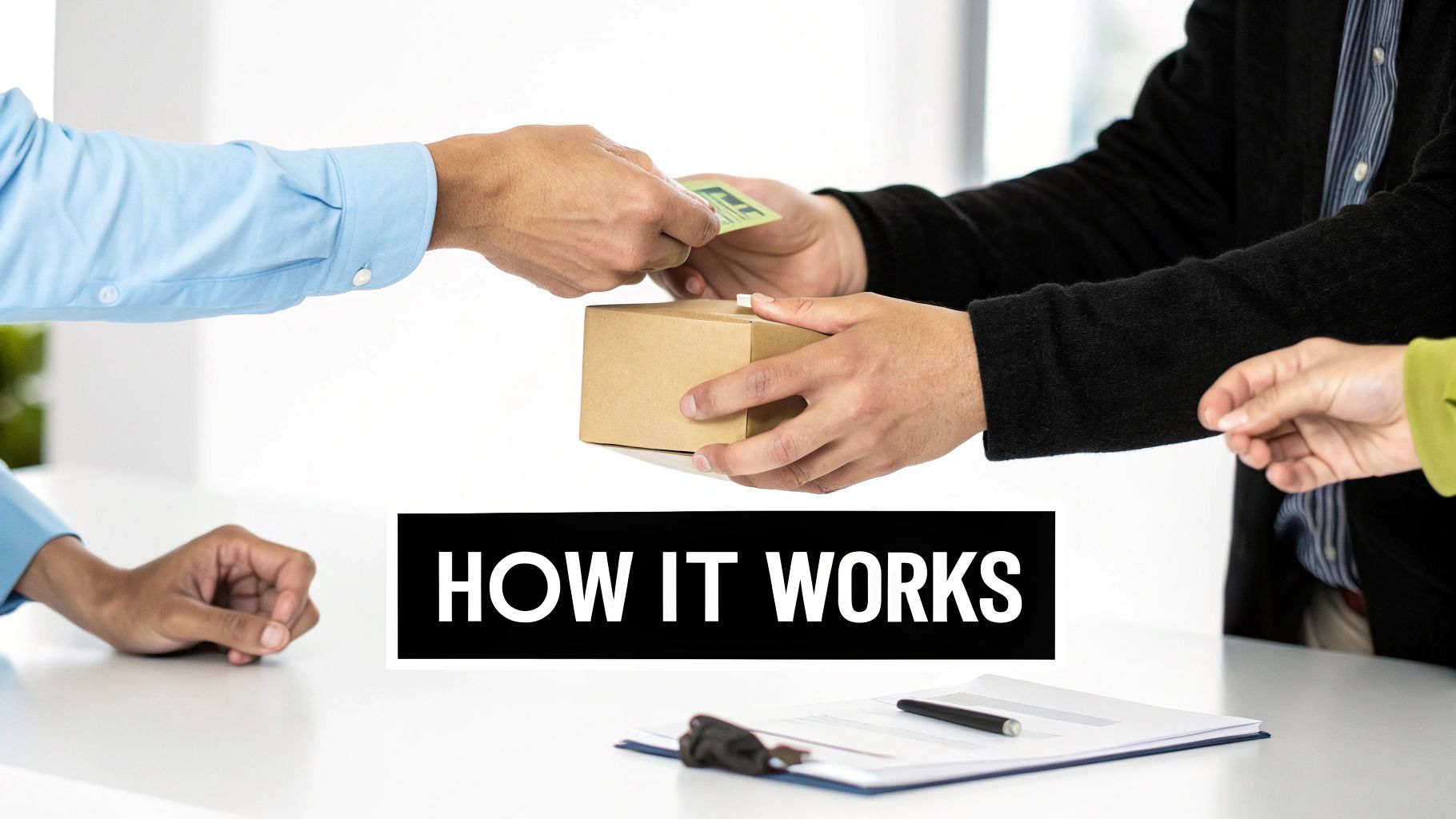
To really get why dropshipping is a legitimate business model and not some fly-by-night scheme, you have to look under the hood. At its heart, it’s just a specific way of handling retail orders. The whole system relies on three key players: the customer, you (the retailer), and the supplier. When everything clicks, it’s a smooth operation for everyone involved.
A good way to think about it is like running a food delivery service for a restaurant you don’t actually own. You create an appealing online menu (your website), market it to hungry customers, and take their orders. As soon as an order comes in, you simply pass it along to the restaurant, which then cooks the food and handles the delivery.
You're not just a passive go-between in this setup. You’re providing real value by building a brand, finding and attracting customers, and managing the entire shopping experience. That role is critical, and doing it well takes real skill.
The Three Core Participants
The whole model is built on everyone knowing their job and doing it right. When each person fulfills their part of the deal, the system works beautifully.
The Customer: This is pretty straightforward—they’re the person who discovers your online store, finds a product they love, and clicks "buy," paying the retail price you've set.
The Retailer (You): As the store owner, you are the seller of record. This is a key term. It means you’re responsible for everything the customer sees: marketing the products, setting the prices, running the website, and handling all customer support. When an order lands, you forward it to your supplier and pay them the lower, wholesale price.
The Supplier: This is the third-party company that holds all the inventory in their warehouse. They’re the ones who pick, pack, and ship the product directly to your customer's doorstep, all while staying completely behind the scenes.
This structure is what allows people to start an e-commerce business without needing a mountain of cash for inventory. And it's not a small niche, either—this model powers over $370 billion in e-commerce sales around the globe every year, which speaks volumes about its legitimacy.
Breaking Down the Step-by-Step Process
Let's walk through a standard transaction to see how all these pieces fit together. It’s a lot less complicated than it sounds and really shows why your job as the brand builder is so vital.
A Customer Places an Order: Someone lands on your online store, finds a product they want, and completes the checkout process, paying the retail price you've set.
You Receive the Order and Payment: Your e-commerce platform notifies you of the new order and processes the customer's payment.
You Forward the Order to Your Supplier: You then place the exact same order with your supplier, paying them their wholesale price. Your profit is the difference.
The Supplier Ships the Product: The supplier's team gets the item ready, packages it up, and ships it directly to your customer's address. Often, they’ll even use packaging with your store’s branding.
You Manage the Customer Relationship: You’re the one who sends the customer their tracking information and handles any questions, returns, or support issues that pop up.
There are plenty of platforms designed to simplify parts of this process, but they aren't all created equal. While tools like Spocket, DSers, Zendrop, or Autods.com offer integrations for product sourcing, they can sometimes lead to a clunky, disconnected experience by separating your suppliers from the rest of your operations. In contrast, a truly all-in-one platform like Ecommerce.co is built from the ground up to support a brand-first approach, bringing everything from supplier sourcing to order fulfillment under a single, unified roof. This creates a much stronger, more cohesive foundation for your business.
If you want to dive even deeper into the mechanics, it's worth checking out a complete guide for beginners on what drop shipping is for a more detailed breakdown.
Why Dropshipping Got a Bad Rap
If dropshipping is a totally legitimate way to run a business, why does everyone keep asking if it's a scam? The truth is, the model itself isn't the problem. The real issue is how some people have abused it.
Dropshipping’s shaky reputation is a direct result of a few bad habits that have, unfortunately, become pretty common. These practices have left a long trail of unhappy customers and created a perfect storm of skepticism. When you put it all together, it’s easy to see why buyers might feel cheated. But the blame here falls squarely on the shoulders of unethical sellers, not the fulfillment method they’re exploiting.
The "Get-Rich-Quick" Fantasy
A huge part of the problem comes from the "get-rich-quick" story sold by so-called online gurus. They paint this picture of effortless income, promising you can make thousands with just a few clicks. This kind of hype lures in a ton of inexperienced people who have unrealistic expectations and absolutely no business plan.
These newcomers often aren't committed to doing the hard work, like finding good suppliers or handling customer service. So, when their stores inevitably flop, they either just disappear—leaving customer orders in limbo—or they add to the growing pile of bad shopping experiences. This constant cycle of poorly run stores is what feeds the idea that the whole industry is a sham.
Junk Products and Misleading Ads
Another massive issue is the sheer volume of low-quality junk being sold. Shady dropshippers are all about profit, so they source the cheapest products they can find without ever bothering to check the quality themselves. They’ll swipe professional-looking photos and use slick marketing to make a $2 gadget look like a premium, must-have item.
But when the package finally shows up weeks later, the customer gets something that barely resembles what they saw online. This classic bait-and-switch is one of the quickest ways to kill trust and rack up negative reviews that damage the reputation of every legitimate dropshipper out there.
"The core of dropshipping's bad reputation comes from a fundamental disconnect between what is promised and what is delivered. When a customer's experience is defined by long waits and disappointing products, they rightly feel scammed."
This problem is only made worse by all the logistical headaches. In fact, e-commerce fraud, which includes dropshipping, is actually growing faster than online sales. Systemic issues like poor product quality, counterfeit items, and surprise shipping delays are behind roughly 1 in 10 customer complaints about fulfillment and authenticity in dropshipping. You can find more insights on the rise of e-commerce fraud trends at HelpNetSecurity.com.
Horrible Shipping and Radio Silence
And finally, there's the classic combo: painfully long shipping times and zero communication. This is the calling card of a terrible dropshipping store. A seller might promise you’ll get your order in 5-7 days, knowing full well it’s coming from halfway across the world and will probably take over a month.
Worse, they don't give you any tracking info or updates, leaving you completely in the dark. This total lack of transparency is a huge red flag and a primary reason so many people walk away thinking dropshipping is just a setup to take their money without providing a real service.
How to Spot and Avoid Dropshipping Scams
Knowing the risks is one thing, but now it's time to learn how to sidestep them. Whether you're a shopper hunting for a great deal or an entrepreneur building a new store, spotting the red flags is a skill you need to develop. The line between a legitimate business and a scam can be incredibly thin, often hidden in details that are easy to overlook.
For Aspiring Entrepreneurs: Vetting Your Partners
If you're building a dropshipping business, your first line of defense is your suppliers. Be wary of any platform or self-proclaimed "guru" promising you'll get rich overnight. Real business doesn't work that way, and those claims are almost always a setup for a scam.
Your real work is in finding and thoroughly vetting reliable partners. One of the most critical steps? Always order samples of the products you plan to sell. This is non-negotiable. It lets you feel the quality, see the packaging, and time the shipping yourself. You need to know what your customers will experience before they do.
For Shoppers: How to Tell if a Store Is Legit
As a customer, you need to put on your detective hat. If a deal seems too good to be true, like a brand-new iPhone for 90% off, it probably is. Pause and investigate before you click "buy."
Legit stores aren't afraid to be contacted. Look for clear, easy-to-find contact information—we're talking a physical address, a customer service phone number, and a professional email address. If that information is missing or buried, consider it a major warning sign.
This decision tree gives you a quick visual guide to the red flags you should be watching out for.
As you can see, things like missing contact info, suspicious-looking reviews, and ridiculously low prices are some of the biggest giveaways of a scam.
A Practical Checklist for Buyers and Builders
Protecting yourself means being proactive. Whether you're buying or selling, the same signs of legitimacy apply.
Here’s a quick checklist to run through before you trust a site:
Check for Detailed Policies: A real store will have clear, comprehensive shipping, return, and privacy policies. If they're vague, hard to find, or nonexistent, that's a huge red flag.
Read Independent Reviews: Don't just trust the glowing testimonials on the store's website—they can be easily faked. Look for reviews on third-party sites like Trustpilot or the Better Business Bureau to get a more honest picture.
Secure Payment Options: Make sure the website checkout is secure. Look for the "https" in the URL, which indicates SSL encryption. A trustworthy site will also offer well-known payment gateways like PayPal or accept major credit cards, which offer better buyer protection.
Staying vigilant is the key. It helps you confidently spot trustworthy businesses and avoid the handful of bad actors that give dropshipping a bad name. For those building a store, protecting your customers is just as crucial as protecting yourself. It's worth exploring some essential ecommerce fraud prevention tools to keep everyone safe.
Building a Legitimate Dropshipping Business
https://www.youtube.com/embed/fp1nFLBdXs8
If you want to build something real and lasting, you have to stop thinking like a reseller and start acting like a true brand owner. This is the single biggest mindset shift you can make. A legitimate dropshipping business isn't about finding the cheapest junk to flip; it’s built on a foundation of trust, quality products, and an unforgettable customer experience.
That kind of foundation doesn’t happen by accident. It starts with picking a niche you're genuinely interested in, not just chasing whatever is trending this week. When you're passionate, it shows—in your marketing, your product descriptions, and your ability to connect with what your customers actually want.
From there, your supplier relationship is everything. Seriously. A reliable partner who ships high-quality products on time is the backbone of your entire operation. This is where so many dropshippers trip up; they chase the lowest price, ignore supplier quality, and end up with a business buried under angry customer emails and a trashed reputation.
The Power of an Integrated Platform
To pull off this brand-first strategy, you need your tools to play nicely together. While sourcing apps like Spocket, DSers, Zendrop, or Autods.com are popular for finding products, they often create a disjointed system. This approach forces you to bounce between different apps and dashboards for sourcing, order processing, and customer support, which gets messy and inefficient fast. Relying on these inferior options can lead to sync errors and operational headaches that undermine your brand.
An all-in-one platform like Ecommerce.co is designed to solve that exact problem. It brings everything together into one cohesive ecosystem, so all the moving parts of your business are in sync.
Building a brand is all about consistency. When your tools are integrated, you can deliver a smooth, consistent experience from the first ad a customer sees to the moment they unbox their order. That’s how you build the trust that separates a real business from a fly-by-night operation.
For anyone serious about building a real dropshipping business, using the right tools, like the best Shopify apps for dropshipping, is non-negotiable for staying organized and scaling up. A unified setup takes the busywork off your plate so you can focus on what really moves the needle: growing your brand.
Platform Approach to Building a Dropshipping Brand
Let’s look at how an all-in-one solution compares to patching together separate, inferior tools, especially when your goal is to build a brand that lasts.
Feature | Ecommerce.co (All-in-One Platform) | Other Tools (e.g., Spocket, DSers) |
|---|---|---|
Supplier Sourcing | Gives you direct access to a network of pre-vetted private suppliers right inside the platform. | Connects you to massive marketplaces, which means you have to do all the heavy lifting to vet suppliers yourself. |
Order Management | Completely automated and centralized. Inventory and orders sync in one dashboard without any extra effort. | Often needs multiple apps or plugins to work, which increases the odds of frustrating sync errors. |
Business Operations | You get a single dashboard for sourcing, sales, and analytics, giving you a crystal-clear view of your business. | Your operations are scattered across different tools, making it tough to get a simple, big-picture overview. |
Brand Focus | The whole system is designed to help you grow your brand with reliable fulfillment and cohesive tools. | Primarily focused on just sourcing products. Branding, operations, and customer experience are left up to you to figure out. |
At the end of the day, the tools you pick will shape what your business is capable of. While you can make it work by cobbling different apps together, an integrated platform gives you a much stronger and more streamlined foundation. It helps you dodge the common pitfalls and build a business that people trust and come back to.
If you're ready to get going, our detailed guide on how to start dropshipping will walk you through the process the right way.
Is Dropshipping Still a Profitable Venture?
After hearing about all the potential pitfalls, you might be asking yourself, "Is dropshipping even worth the effort anymore?" The short answer is a resounding yes. Dropshipping isn't dying; it's maturing. The get-rich-quick loopholes of the past have closed, making way for real business strategy. This evolution is the best proof that it's a legitimate model with long-term potential, not a fleeting scam.
The numbers tell a compelling story. Despite the noise, the industry is on a massive growth trajectory. Market research forecasts the global dropshipping market to skyrocket from around $435 billion in 2025 to over $2.2 trillion by 2033. This incredible growth is still fueled by what made it popular in the first place: low barriers to entry and minimal startup costs. For a closer look at what's driving this expansion, check out these dropshipping growth trends and tariff impacts.
Adapting to Modern Challenges
The key to success today is simple: adaptation. Modern hurdles like tangled supply chains and changing international tariffs aren't signs that the model is broken. They're just new challenges that smart entrepreneurs are learning to navigate. These complexities don't make dropshipping a scam—they just raise the bar for entry.
This new landscape demands a shift in focus. It's less about finding a winning product and more about building a winning business. That means prioritizing:
High-Quality Products: Ditching the cheap, generic junk and offering items that genuinely solve a problem or bring joy to your customers.
Strategic Sourcing: Moving beyond random suppliers to build solid relationships with reliable partners who deliver on quality and shipping times.
Customer Loyalty: Creating a memorable brand experience that builds trust and keeps customers coming back.
The new era of dropshipping is less about finding a clever workaround and more about applying proven business principles to a modern retail framework. Profitability is a direct result of building a legitimate, customer-focused brand.
Success is absolutely within reach, but it requires a professional mindset. How profitable you are comes down to your execution and strategy. To get a clearer picture of the income potential, it’s worth understanding how much you can realistically make from dropshipping, which often depends on your niche and level of effort.
At the end of the day, your profit in dropshipping will reflect the value you create, not the system you exploit.
Wrapping Up: Your Top Dropshipping Questions Answered
Alright, let's tie everything together. We've gone through the good, the bad, and the ugly of dropshipping. To finish up, I want to tackle a few of the most common questions that pop up when people are trying to figure out if this is all for real.
Think of this as a final check to clear up any last bits of uncertainty.
Is Dropshipping Actually Legal?
Yes, 100% legal. Dropshipping is just another way of getting a product to a customer—a fulfillment method used by everyone from solo entrepreneurs to massive retailers.
The model itself is perfectly legitimate. The problems you hear about? Those come from shady operators and unethical business practices, not the business model itself.
Why Do So Many People Fail at It?
This is a big one. So many newcomers crash and burn because they’ve been sold a dream of easy money. They dive in expecting to get rich overnight, without putting in the work.
They don't take the time to learn about marketing, they don't vet their suppliers, and they quit the second things get tough. A dropshipping store is a real business, and like any real business, it demands patience, strategy, and a ton of effort to succeed.
Can You Still Make Good Money with Dropshipping?
You absolutely can. The key is to stop thinking about it as just selling random, cheap products. The real money is in building a genuine brand.
Successful dropshippers today are the ones who find great products from reliable suppliers, create a fantastic customer experience, and build a brand people actually want to buy from. Your potential to earn is directly tied to the real value you bring to your customers.
Ready to build a legitimate dropshipping business the right way? Ecommerce.co provides an all-in-one platform with vetted private suppliers and automated tools, giving you the foundation to build a brand that customers trust. Start your free trial today and see how simple it can be.